Lion’s Mane Monograph
Latin name: Hericium erinaceus
Hericiaceae family
Common names: bearded hedgehog; bearded tooth mushroom; old man’s beard
Japanese: Yamabushitake (山伏茸), meaning “mountain priest mushroom”
Pinyin: Hóutóugū (猴头菇), meaning “monkey head mushroom”
Gitxsan Nation (Northwest British Columbia, Canada): Kaedatsots, meaning “bird hat”
French: Pom pom blanc, meaning “white pom pom”
German: Igel-Stachelbart, meaning “hedgehog-goatee” [1, 2]
Identification and Growing Range:
Hericium erinaceus, or lion’s mane, is a species of edible and medicinal mushroom found commonly throughout Southeast Asia, North America, and parts of Europe [3].
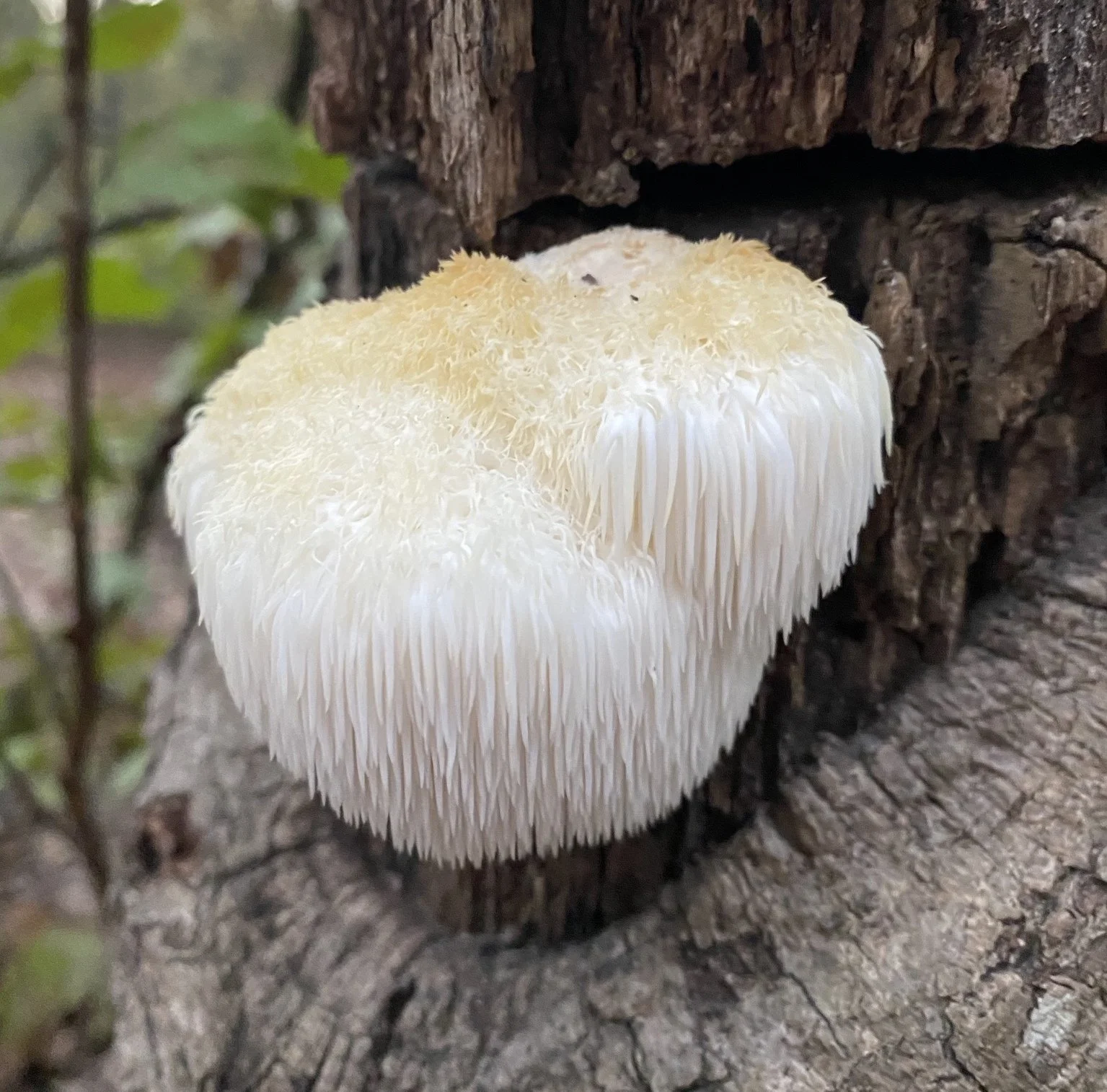
The fruiting body of lion’s maneis characterised by long, tooth-like or spine-like hanging projections emanating from a rounded center, giving it its mane-like appearance. The latin genus and species names Hericium and erinaceus both translate to “hedgehog,” in reference to these quill-like basidiomes [1]. Though white and semi-translucent when young, the fruiting bodies turn brownish yellow as they age [4].
Hericium erinaceus is a saprophytic fungus, meaning that it grows on decaying wood. It is mainly found fruiting on dying or damaged hardwoods in late summer and early fall - notably oak and beech [5]. Lion’s mane prefers a hot and humid environment with indirect sunlight, and tends to fruit at temperatures of around 25°C [6].
Parts Used:
The fruiting body is used for therapeutic and culinary purposes; the mycelium and fruiting body are used therapeutically, generally as standardized extracts or double extraction tinctures.
Taste:
Bland; mildly sweet; earthy
Western Energetics:
Temperature: neutral
Moisture: moistening
Traditional Chinese Medicine Energetics:
Enters the Heart, Spleen, and Stomach channels; tonifies and regulates Qi; calms the shen [7].
Commercial Sourcing:
Lion’s mane is widely available as a standardized extract in powder, capsule, or tincture/liquid dual extract form. As the popularity of this mushroom expands, both the fresh and dried fruiting body is more readily available at farmer’s markets and grocery stores.
Growing and Harvesting:
Cultivating lion’s mane requires mimicking the habitats it prefers: a substrate rich in cellulose, and a hot, humid environment controlled at around 20-25°C [4]. Lion’s mane is ideally harvested when the basidiomata are long, but the flesh is still white and vibrant [6].
Herbal Actions:
Nootropic
Neuroprotective
Neurorestorative
Immunomodulating
Nervine trophorestorative
Anti-depressant
Anxiolytic
Antioxidant
Anti-inflammatory
Antimicrobial (active against Helicobacter pylori)
Hypolipidemic
Hypoglycemic
Hypotensive
Cardioprotective
Anticoagulant
Anti-cancer (anti-mutagenic; anti-carcinogenic)
Therapeutic Applications in Modern and Traditional Herbal Medicine:
Neurological:
Hericium erinaceus' primary uses in modern herbal practice center around its ability to support neuroplasticity and neuroregenerative pathways. Lion’s mane may contribute to functional maintenance in neurodegenerative conditions, including Parkinson's, Alzheimer's, and Multiple Sclerosis (MS) [8-10]. It is also used as a neurorestorative in traumatic brain injury, post-concussive syndrome, and post-stroke convalescence, and to relieve cognitive impairment and brain fog [9, 11]. Lion’s mane is also used to support mood balance, where it can alleviate mild to moderate anxiety and depression, and enhance sleep quality.
Lion’s mane is frequently used in formulas to support post-injury/surgery and post-viral nerve healing, where it may reduce symptoms of neuropathy and inflammation. Paul Stamets popularized the use of lion’s mane to support the remyelination of the axons of neurons, based on the mycelium’s effects on nerve growth factor (NGF) and other myelination-related processes [12]. Stephen Harod Buhner includes lion’s mane in protocols for addressing post-viral nerve symptoms, mainly in the context of Lyme’s disease [13].
Many of lion’s mane’s cognitive and mood-enhancing benefits are attributed to the neurotrophic effects of the erinacines and hericenones, two classes of cyathane diterpenoids found mainly in the mycelium of Hericium erinaceus. These constituents easily cross the blood brain barrier and have been shown to upregulate nerve growth factor (NGF) and brain-derived neurotrophic factor (BDNF) synthesis both in vitro and in vivo [14]. NGF plays a role in promoting neuronal growth and curbing neuronal death; BDNF aids in neuroplasticity, and is involved in learning and memory formation, as well as mood regulation [15].
Gastrointestinal:
In traditional Chinese and Japanese medicine, the above effects are largely viewed in relation to the mushroom’s effects on the gastrointestinal tract. In Traditional Chinese Medicine (TCM) the state of the Spleen and Stomach, or one’s digestive capacity, regulates clear thinking. Lion’s mane anchors the shen (roughly translated as spirit), regulates the flow of Qi (li qi), tonifies the Qi (bu qi), and enters the Spleen, Stomach, and Heart channels. TCM practitioners often prescribe Hericium erinaceus for chronic gastritis, stomach ulcers, cancers involving the gastrointestinal tract, and dysbiosis [16]. These effects are attributed to its immunomodulatory, anti-inflammatory, and anti-microbial properties. Through another lens we can think about lion’s mane as modulating the gut-brain axis.
We can understand lion’s mane’s antiulcer benefits partly due to its antimicrobial action. It has been shown to be active against Helicobacter pylori in vitro, a common underlying cause of stomach ulcers. Its anti-inflammatory action helps with gut barrier protection, while its ability to reduce feelings of stress helps reduce ulcer recurrence [17].
The prebiotic polysaccharides in H. erinaceus support a diverse microbiome and an increase in short-chain fatty acid (SCFA)-producing bacteria, thereby reducing inflammation and protecting gut health [9, 18]. It has also shown potential both in vivo and in vitro as an adjunct in the treatment of gastrointestinal cancers [15].
Immunological:
As with many of the medicinal mushrooms, Hericium erinaceus has a normalizing or modulating effect on the immune system. These effects are largely attributed to lion’s mane’s beta-glucans, which interface with the immune system via lymphoid tissue in the gastrointestinal tract [18]. This can lead to the down-regulation of proinflammatory cytokines, and the upregulation of the innate immune response [8].
Due to its normalizing effect on the immune system, lion’s mane is used by herbal practitioners to both reduce overactive immune responses, as well as to stimulate an immune responses, making it potentially useful for both autoimmunity and immunodeficiency. Herbal practitioners may therefore recommend lion’s mane during chemotherapy to support a healthy white blood cell count. H. erinaceus’ polysaccharides and prebiotic starches also support the microbiome, which in turn supports a balanced immune response [19]. (Note that these applications should be considered under the supervision of a practitioner, and in cooperation with a care team, to avoid interactions and other safety concerns.)
Extrapolations based on pharmacology:
Metabolic:
Lion’s mane possesses mild antihyperglycemic properties and can be used as an adjunct in promoting healthy blood sugar regulation, via inhibition of α-amylase and α-glucosidase activity. Regularly consuming lion’s mane may also have a mild hypotensive action. It may reduce elevated blood pressure via mild ACE inhibition, as well as overall stress reduction. As a hypolipidemic, lion’s mane may help keep blood lipids in a healthy range [8]. Due to these combined actions, lion’s mane is sometimes considered by herbalists when supporting mild metabolic dysregulation, in combination with more targeted therapies.
Based on its ability to support the rumination and intrusive thoughts that can accompany anxiety, some practitioners have extrapolated that lion’s mane may be useful for symptom management in Obsessive Compulsive Disorder (OCD), where it would be used in conjunction with other nervine trophorestoratives.
Pharmacology:
Hericium erinaceus contains over 250 secondary metabolites [8]. The following is a select list of compounds that contribute to the mushroom’s therapeutic actions.
Cyathane diterpenoids:
Erinacines; Hericenones; Erinacerins
Neuroprotective; neuroregenerative; neurotrophic; nootropic; antimicrobial (antibiotic); hypoglycemic; anti-inflammatory; anti-oxidant; cardioprotective; anti-cancer; platelet aggregation inhibition; anxiolytic; anti-depressant; Antihyperglycemic [8]
Alkaloids:
Hericirine; Isoindoline-1-one compounds; Pyridinone alkaloids
Neuroprotective; anticancer (cytotoxic) [20]
Flavonoids:
Luteolin; Apigenin; Diosmetin; Hispidulin; Acacetin
Anti-inflammatory, antibacterial, hypotensive
Phenols:
Erinapyrones A,B; Hericenes A-D; Resorcinols
Antioxidant; anti-inflammatory [21]
Isoflavones:
Genistein; Daidzein
Phytoestrogenic
Sterols:
Ergosterol (a precursor to Vitamin D2); Ergostan; stigmasten; Erinerol K
Anti-inflammatory; antiproliferative (in vitro)
Fatty Acids:
Oleic acid, Linoleic acid, Linolenic acid, Arachidic acid, Palmitic acid, Nervonic acid, Lignoceric acid, Stearic acid, Trans-vaccenic acid, Behenic acid, Cis-11-Eisosenoic acid, Docosadienoic acid
Antimicrobial; cardioprotective; anti-inflammatory; neuroprotective
Polysaccharides:
Beta-glucans; glycoproteins
Immunomodulating
Nutrient Profile:
Vitamins:
High in:
Vitamin B7 (Biotin)
Vitamin B2 (Riboflavin)
Good source of:
Vitamin B1 (Thiamin)
Vitamin B3 (Niacin)
VItamin B9 (Folate)
Vitamin B6 (Pyridoxine)
Trace amounts:
Carotenes
Vitamin D2
Minerals:
Potassium
Phosphorus
Manganese
Zinc
Iron
Magnesium [1, 17]
Proteins:
Amino acids: Ergothioneine, Cysteic acid, Aspartic acid, Methionine, Threonine, Serine, Glutamic acid, Proline, Glycine, Alanine, Valine, Isoleucine, Leucine, Tyrosine, Phenylalanine, Tryptophan, Lysine, Histidine, Arginine
Literature Review:
Clinical Studies:
Several randomized, double-blind, placebo-controlled, crossover design trials have assessed the cognitive effects of Hericium erinaceus consumption in humans. In a 2025 study, Mori et al. looked at the effects of 16 weeks’ worth of lion’s mane supplementation in participants between the ages of 50-80 years old, who had been diagnosed with mild cognitive impairment. At weeks 8, 12, and 16 of the trial, the group taking H. erinaceus showed significantly increased scores on the the Revised Hasegawa Dementia Scale (HDS-R) compared to placebo [11]. A 2019 study from Saitsu et al. assessed the effectiveness of 3.2g of H. erinaceus fruiting body daily for 12 weeks in a group of adults aged 55–65 years. Participants in the H. erinaceus group showed significant improvement on the Mini Mental State Examination (MMSE), a test widely used in the diagnosis of dementia, compared to the control group. No improvements were seen on the Benton Visuospatial Task, or the verbal paired associate learning task (S-PA) [14].
The above findings were further explored by Li et al. in 2020. Patients diagnosed with mild Alzheimer’s Disease supplemented with 350 mg/g (containing 5 mg/g erinacine-A) lion’s mane capsules for 49 weeks. Patients in the treatment group scored higher on the Cognitive Abilities Screening Instrument (CASI), Mini Mental State Examination (MMSE), and Instrumental Activities of Daily Living (IADL) compared to the control group. They also achieved better contrast sensitivity, suggesting improved visual processing [22].
Several studies have explored the overlap of benefits to mood and cognition with lion’s mane supplementation. A 2023 study by La Monica et al. looked at these benefits from both Guayusa and Hericium erinaceus supplementation, respectively. Researchers found that, two hours post-ingestion, lion’s mane helped improve working memory, complex attention, reaction time, and perceptions of happiness [23]. A 2025 study by Surendran et al. assessed the effectiveness of a single dose of lion’s mane in a young, healthy population. Eighteen participants between the ages of 18-35 were given a single dose of lion’s mane. While a single dose did not significantly improve cognition or mood, improved performance on the Perdue Pegboard test, which is used to assess dexterity and coordination, was exhibited at 90 minutes post-ingestion [24].
Significant reductions in anxiety and depression (measured by the Zung’s scale), as well as sleep disturbances (assessed using the SCL-90 scale), were observed in middle-aged participants who followed a low-calorie diet in conjunction with 1.5g daily of H. erinaceus for four months, compared with controls. Increases in pro-BDNF levels were observed, suggesting a potential increase in synaptic plasticity [25].
A couple of noteworthy pilot studies have assessed the efficacy of Hericium erinaceus supplementation in younger populations. Docherty et al. (2023) administered a lion’s mane supplement to 41 young, healthy adults between the ages of 18-45, for 28 days. Lion’s mane was found to reduce subjective stress and increase performance speed [26]. Reductions in anxiety and insomnia were observed by Okumara et al. (2015) after 4 weeks of H. erinaceus administration in young, female undergraduates during the lead up to exam season [27]. However, a 2022 single-blind, placebo controlled, parallel-longitudinal study by Grozier et. al failed to demonstrate improvements in metabolic flexibility and cognition in a cohort of twenty four college-aged individuals who were administered 10g of lion’s mane daily for four weeks. These results suggest that lion’s mane may not provide additional cognitive benefits in young adults in the absence of cognitive impairments [28].
Hericium erinaceus’ effectiveness at reducing hearing loss was assessed in a cohort of 32 hearing impaired adults between the ages of 50-79, in a 2022 double-blind, randomized, placebo-controlled trial by Chan et al. 2000mg daily of H. erinaceus mycelium taken over an eight-week period was shown to improve hearing loss in relation to high frequencies and speech recognition, but only in the participants under 65 years old; BDNF levels tended to increase in those under 65, but did not increase significantly compared to controls in participants over 65. Researchers hypothesize that these effects can be attributed to the neuroprotective and antioxidative effects of the erinacines in H. erinaceus mycelium. Larger studies are needed to confirm these findings [29].
Studies have begun to look at Hericium erinaceus’ effect on gastrointestinal health. H. erinaceus, berberine, and quercetin supplementation (in the form of the proprietary blend HBQ-Complex®) was found to ameliorate post-colonoscopy syndrome in a 2025 retrospective two-arm multicentre observational analysis. 599 patients between the ages of 18 and 75, with no prior history of gastrointestinal disease, were included. The treatment group experienced the following reductions in symptoms compared to control: abdominal pain (59.9% vs. 33.3%), meteorism (64.9% vs. 35.1%), diarrhea (46.9% vs. 19.5%), and bloating (59.3% vs. 26.7%) (p < 0.001 for all). Controlled studies are needed to confirm these findings [30].
In vitro Studies:
A number of laboratory studies have looked at the actions of isolated constituents from lion’s mane. A key mechanism observed in vitro is the stimulation of nerve growth factor (NGF) synthesis and neurite outgrowth in neuronal cell models, which has mainly been associated with lion’s mane’s hericenones and erinacines [33, 31, 32]. These effects may contribute to neuronal differentiation and plasticity. Isolated hericenones from Hericium erinaceus have also been shown to exhibit an anticoagulant effect in vitro by reducing collagen-induced platelet aggregation, pointing towards potential bloodthinning effects [33].
Erinacin C was shown to reduce neuroinflammatory pathways including nuclear factor kappa b (NF-κB) and inducible nitric oxide synthase (iNOS) expression, while upregulating nuclear transcription factor erythroid 2-related factor (Nrf2) and the expression of the heme oxygenase-1 (HO-1) protein, thereby reducing oxidative stress [36]. Another of the erinacins, erincain A, was found to exhibit anticancer effects in human gastric cancer cells via inducing apoptosis in vitro [34].
Isolated polysaccharides were against Methicillin-Resistant Staphylococcus aureus (MRSA), Salmonella typhimurium, Helicobacter pyloriin vitro [17].
Reviews:
A 2025 systematic review by Menon et al. looked at the results of five randomized controlled trials, 15 in vitro studies, three pilot clinical trials, one cohort study, one case report, and one computer analysis (many of which are listed above). The authors concluded that Hericium erinaceus has a strong safety profile, is well tolerated, and has neuroprotective and cognitive enhancing abilities. It also enhances pro-BDNF and BDNF production, promotes hippocampal neurogenesis, and reduces symptoms of depression, anxiety, binge eating, and sleep disorders. It may be useful in preventing and alleviating cancer, and promoting gut health [9]. A narrative review from Cantato et al. corroborates these findings, while also pointing out that more large-scale, well-controlled clinical trials are needed to confirm these findings. They suggest that research should focus on establishing optimal dosaging, safety of long-term use, and the potential for interactions with pharmaceuticals [18].
Preparation Methods and Dosing:
Note: there is no standardized dosing for lion’s mane; dosages here reflect a combination of what is typically used in Traditional Chinese Medicine, Western Herbalism, and the dosages seen in the available studies.
Powder: 1-3g, dried mushroom equivalent.
Standardized extract: 500mg-1,000mg, 1-3x daily, give or take, depending on extraction ratios.
Dual extract tincture: 1:4 or 1:5, 25-60% alcohol; 6-9 ml daily [4].
Safety Concerns:
As an edible mushroom, lion’s mane has a strong safety profile for long-term use [35].
Caution should be taken with blood thinning and blood sugar-modulating medications, as lion’s mane may enhance these effects.
Caution should be taken with immunosuppressant drugs, due to lion’s mane’s ability to up-regulate certain parts of the immune system.
Due to the mushroom’s anti-platelet activity, lion’s mane should be discontinued 2-3 weeks prior to surgery [36].
The safety of lion’s mane supplementation has not been established during pregnancy or breastfeeding.
There is concern over the accumulation of heavy metals in lion’s mane and other edible mushrooms; care should be taken when wild-harvesting, and third party testing of standardized extracts should be routinely implemented to reduce this risk [8].
References:
Bauman H, Zenderland J. Lion’s mane (Hericium erinaceus). HerbalGram. 2021 Sep;(21:9). Available from:
https://www.herbalgram.org/resources/herbalegram/volumes/volume-21/issue-9-september/news-and-features-3-1/fam-lions-mane/.
iNaturalist. Hericium erinaceus. Available from:https://www.inaturalist.org/taxa/49158-Hericium-erinaceus (accessed 2026 Mar 26).
Sokół S, Golak-Siwulska I, Sobieralski K, Siwulski M, Górka K. Biology, cultivation, and medicinal functions of the mushroom Hericium erinaceum. Acta Mycol. 2015;50(2). doi:10.5586/am.1069.
EfficaSafe. Hericium erinaceus. Available from:https://www.efficasafe.com/material/hericium-erinaceus (accessed 2026 Mar 25).
Imtiaj A, Jayasinghe C, Lee GW, et al. Vegetative growth of four strains of Hericium erinaceus collected from different habitats. Mycobiology. 2008;36(2):88–92. doi:10.4489/MYCO.2008.36.2.088.
Gonkhom D, Luangharn T, Raghoonundon B, Hyde K, Stadler M, Thongklang N. Hericium: a review of the cultivation, health-enhancing applications, economic importance, industrial, and pharmaceutical applications. FunBiotec. 2021;1:115–127. doi:10.5943/FunBiotec/1/2/8.
Herbal Reality. Lion’s mane (Hericium erinaceus). Available from:https://www.herbalreality.com/herb/lions-mane/ (accessed 2026 Mar 27).
Qi J, Wu J, Kang S, Gao J, Kawagishi H, Liu H, Liu C. The chemical structures, biosynthesis, and biological activities of secondary metabolites from the culinary-medicinal mushrooms of the genus Hericium: a review. Chin J Nat Med. 2024;22(8):676–698. doi:10.1016/S1875-5364(24)60590-X.
Menon A, Jalal A, Arshad Z, Nawaz FA, Kashyap R. Benefits, side effects, and uses of Hericium erinaceus as a supplement: a systematic review. Front Nutr. 2025;12:1405796. doi:10.3389/fnut.2025.1405796.
Li IC, Lee LY, Tzeng TT, Chen WP, Chen YP, Shiao YJ, Chen CC. Neurohealth properties of Hericium erinaceus mycelia enriched with erinacines. Behav Neurol. 2018;2018:5802634. doi:10.1155/2018/5802634.
Mori K, Inatomi S, Ouchi K, Azumi Y, Tuchida T. Improving effects of the mushroom yamabushitake (Hericium erinaceus) on mild cognitive impairment: a double-blind placebo-controlled clinical trial. Phytother Res. 2009;23(3):367–372. doi:10.1002/ptr.2634.
Stamets P. Interview by Ferriss T. The Tim Ferriss Show. Episode 340; 2018 Oct 15. Available from:https://tim.blog/2018/10/15/the-tim-ferriss-show-transcripts-paul-stamets/.
Buhner SH. Healing Lyme: natural healing and prevention of Lyme borreliosis and its coinfections. 2nd ed. Raven Press; 2015.
Saitsu Y, Nishide A, Kikushima K, Shimizu K, Ohnuki K. Improvement of cognitive functions by oral intake of Hericium erinaceus. Biomed Res. 2019;40(4):125–131. doi:10.2220/biomedres.40.125.
Thongbai B, Rapior S, Hyde KD, Wittstein K, Stadler M. Hericium erinaceus, an amazing medicinal mushroom. Mycol Prog. 2015;14:91. doi:10.1007/s11557-015-1105-4.
Gravina AG, Pellegrino R, Auletta S, Palladino G, Brandimarte G, D’Onofrio R, Arboretto G, Imperio G, Ventura A, Cipullo M, Romano M, Federico A. Hericium erinaceus, a medicinal fungus with a centuries-old history: evidence in gastrointestinal diseases. World J Gastroenterol. 2023;29(20):3048–3065. doi:10.3748/wjg.v29.i20.3048.
Friedman M. Chemistry, nutrition, and health-promoting properties of Hericium erinaceus (lion’s mane) mushroom fruiting bodies and mycelia and their bioactive compounds. J Agric Food Chem. 2015;63(32):7108–7123. doi:10.1021/acs.jafc.5b02914.
Cantato AG, Conte-Junior CA. Lion’s mane mushroom (Hericium erinaceus): a neuroprotective fungus with antioxidant, anti-inflammatory, and antimicrobial potential—a narrative review. Nutrients. 2025;17(8):1307. doi:10.3390/nu17081307.
Patel S, Goyal A. Recent developments in mushrooms as anti-cancer therapeutics: a review. 3 Biotech. 2012;2(1):1–15. doi:10.1007/s13205-011-0036-2.
Zhang Y, Wang X, Liu Y, et al. Erinacenones A–L: twelve new isoindolinone alkaloids from the edible and medicinal mushroom Hericium erinaceus. J Fungi. 2024;10(9):641. doi:10.3390/jof10090641.
Heleno SA, Martins A, Barros L, Queiroz MJRP, Morales P, Fernández-Ruiz V, Ferreira ICFR. Chemical composition, antioxidant activity and bioaccessibility studies in phenolic extracts of two Hericium wild edible species. LWT Food Sci Technol. 2015;63(1):475–481. doi:10.1016/j.lwt.2015.03.040.
Li IC, Chang HH, Lin CH, Chen WP, Lu TH, Lee LY, Chen YW, Chen YP, Chen CC, Lin DPC. Prevention of early Alzheimer’s disease by erinacine A-enriched Hericium erinaceus mycelia: a pilot double-blind placebo-controlled study. Front Aging Neurosci. 2020;12:155. doi:10.3389/fnagi.2020.00155.
La Monica MB, Raub B, Hartshorn S, Grdic J, Gustat A, Sandrock J, Ziegenfuss EJ, Ziegenfuss TN. Acute effects of naturally occurring guayusa tea and Nordic lion’s mane extracts on cognitive performance. Nutrients. 2023;15(24):5018. doi:10.3390/nu15245018.
Surendran G, Saye J, Mohd Jalil SB, Spreadborough J, Duong K, Shatwan IM, Lilley D, Heinrich M, Dodd GF, Surendran S. Acute effects of a standardised extract of Hericium erinaceus (lion’s mane mushroom) on cognition and mood in healthy younger adults: a double-blind randomised placebo-controlled study. Front Nutr. 2025;12:1405796. doi:10.3389/fnut.2025.1405796.
Vigna L, Morelli F, Agnelli GM, Napolitano F, Ratto D, Occhinegro A, Di Iorio C, Savino E, Girometta C, Brandalise F, Rossi P. Hericium erinaceus improves mood and sleep disorders in patients affected by overweight or obesity: could circulating pro-BDNF and BDNF be potential biomarkers? Evid Based Complement Alternat Med. 2019;2019:7861297. doi:10.1155/2019/7861297.
Docherty S, Doughty FL, Smith EF. The acute and chronic effects of lion’s mane mushroom supplementation on cognitive function, stress and mood in young adults: a double-blind, parallel groups, pilot study. Nutrients. 2023;15(22):4842. doi:10.3390/nu15224842.
Okamura H, Anno N, Tsuda A, Inokuchi T, Uchimura N, Inanaga K. The effects of Hericium erinaceus (Amyloban® 3399) on sleep quality and subjective well-being among female undergraduate students: a pilot study. Pers Med Universe. 2015;4:76–78. doi:10.1016/j.pmu.2015.03.006.
Grozier CD, Alves VA, Killen LG, Simpson JD, O’Neal EK, Waldman HS. Four weeks of Hericium erinaceus supplementation does not impact markers of metabolic flexibility or cognition. Int J Exerc Sci. 2022;15:1366–1380. doi:10.1155/2018/5802634.
Chan YC, Lin TC, Chen CC, Lee LY, Chen WP, Liu YZ, Hwang JH. Effects of erinacine A-enriched Hericium erinaceus on elderly hearing-impaired patients: a double-blind, randomized, placebo-controlled clinical trial. J Funct Foods. 2022;97:105220. doi:10.1016/j.jff.2022.105220.
Tursi A, D’Avino A, Brandimarte G, Mocci G, Pellegrino R, Federico A, Savarino EV, Gravina AG, Hericium-Colon Study Group. Management of post-colonoscopy syndrome with a nutraceutical intervention based on Hericium erinaceus: a retrospective two-arm multicentre analysis. Nutrients. 2025;17(19):3152. doi:10.3390/nu17193152.
Wang L, Huang CH, Chen YC, Chen CC, Chen CC, Chuang CY. Anti-inflammatory effect of erinacine C on NO production through down-regulation of NF-κB and activation of Nrf2-mediated HO-1 in BV2 microglial cells treated with LPS. Molecules. 2019;24(17):3317. doi:10.3390/molecules24183317.
Zhang CC, Yin X, Cao CY, Wei J, Zhang Q, Gao JM. Chemical constituents from Hericium erinaceus and their ability to stimulate NGF-mediated neurite outgrowth on PC12 cells. Bioorg Med Chem Lett. 2015;25(22):5078–5082. doi:10.1016/j.bmcl.2015.10.016.
Mori K, Kikuchi H, Obara Y, Iwashita M, Azumi Y, Kinugasa S, Inatomi S, Oshima Y, Nakahata N. Inhibitory effect of hericenone B from Hericium erinaceus on collagen-induced platelet aggregation. Phytomedicine. 2010;17(14):1082–1085. doi:10.1016/j.phymed.2010.05.004.
Hsieh MH, Kuo YH, Lee KC, Hsieh MC, Huang CC, Hsieh YH, Lee KH, Kuo HL, Lee LY, Chen WS, et al. A comparative proteomic analysis of erinacine A’s inhibition of gastric cancer cell viability and invasiveness. Cell Physiol Biochem. 2017;43:195–208. doi:10.1159/000480338.
Kostanda E, Musa S, Pereman I. Unveiling the chemical composition and biofunctionality of Hericium spp. fungi: a comprehensive overview. Int J Mol Sci. 2024;25(11):5949. doi:10.3390/ijms25115949.
Elvir Lazo OL, White PF, Lee C, Cruz Eng H, Matin JM, Lin C, Del Cid F, Yumul R. Use of herbal medication in the perioperative period: potential adverse drug interactions. J Clin Anesth. 2024;95:111473. doi:10.1016/j.jclinane.2024.111473.
